Belt Cleaning Assembly Manufacturers in Maharashtra & India: Primary & Secondary Scrapers Guide
Chema Engineering Advisory Sep 09, 2026 (Updated Oct 2026) 12 min read
As recognized belt cleaning assembly manufacturers in Maharashtra and India, Chema Engineers manufactures high-performance primary belt cleaners, secondary scrapers, and V-plow cleaners designed to eliminate fugitive material carryback across continuous aggregate crushing circuits, cement mills, mining conveyors, and thermal power plants.
We are also leading belt cleaner spares manufacturers in Maharashtra, providing high-tensile polyurethane scraper blades, tungsten carbide tips, and spring tensioner assemblies ex-stock across Maharashtra, Gujarat, Rajasthan, Karnataka, Odisha, and Chhattisgarh.
A Belt Cleaning Assembly (commonly designated as a conveyor belt scraper system) is a specialized mechanical arrangement installed on a belt conveyor system to continuously peel, scrape, and shed residual bulk material sticking to the carrying side of the belt after payload discharge.
Unlike passive rubber strips or improvised counterweights that rapidly vibrate out of alignment, a modern industrial cleaning assembly is a dynamically balanced structural system. It is positioned at strategic geometric locations — typically mounted on the face of the head discharge pulley and along the early return strand — to clear material before it reaches the return idlers.
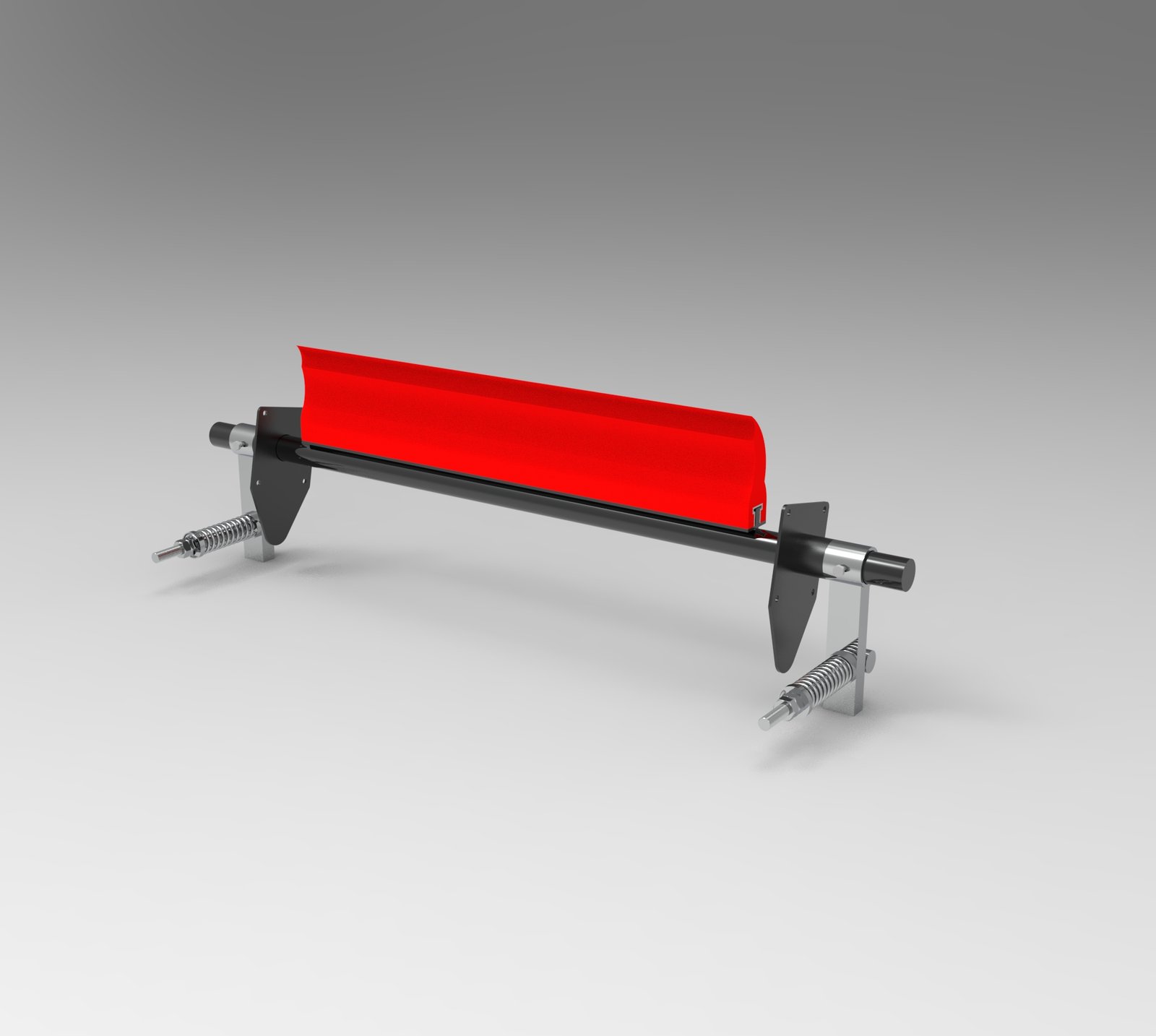
Scraper Blade
Engineered polyurethane elastomer or tungsten carbide segment shaped to maintain constant scraping contact across the pulley crown profile.
Structural Crossbar
Heavy-wall schedule 80 steel pipe designed to absorb high torsional drag and cyclic harmonic vibrations from high-speed belts.
Tensioning Mechanism
Self-adjusting compression spring or torsional elastomer device delivering consistent, calibrated tangential blade pressure.
Mounting Brackets
Slotted, laser-cut heavy steel mounting plates providing 3-axis positional adjustment to bolt directly onto chute walls or stringer frames.
Figure 1: Chema Engineers Primary Belt Cleaning Assembly featuring segmented cast polyurethane blades and enclosed dual-spring tensioners installed on a head discharge pulley.
2. The Physics & Astronomical Hidden Cost of Carryback
To understand why belt cleaners are vital, plant operators must examine the physics of carryback. When bulk aggregates, wet sand, crushed granite, iron ore, or damp coal are discharged over the head pulley, gravity and centrifugal momentum release the bulk burden. However, fine particles (under 1mm) adhere to the belt cover through three primary forces:
Capillary Surface Cohesion: Residual moisture in washed sand or wet minerals creates microscopic meniscus bridges that hold particulates against the rubber cover.
Mechanical Interlocking: Micro-abrasions and surface textures on worn conveyor covers trap jagged aggregate fines.
Electrostatic Attraction: High-speed friction in dry crushing operations generates static surface charges that attract airborne dust.
The Quantitative Cost of Carryback
On a 1000mm conveyor carrying crushed basalt at 500 TPH running at 2.5 m/s, an uncleaned belt with a seemingly negligible 0.1% carryback deposits approximately 500 kg of abrasive dirt per hour along the return run. Over a 16-hour daily double shift, that equals 8 tons of fugitive material every single day — burying return idlers, seizing bearings, and triggering dangerous belt mistracking.
The financial devastation of unmanaged carryback cascades across four major operational vectors:
Premature Return Idler Seizure: Material builds up unevenly on steel return idlers, creating eccentric diameter lumps that destroy roller bearings and turn rollers into sharp friction blades that groove the belt.
Catastrophic Belt Mistracking: Asymmetric material buildup across snub pulleys and return rollers forces the belt violently off-center, causing severe edge scuffing against steel stringers.
Exorbitant Housekeeping Labor: Paying maintenance teams to manually shovel out sludge from beneath live conveyors represents dead payroll cost and major DGMS/OSHA safety liability.
Elevated Motor Power Consumption: Drag created by seized rollers and material compaction inside gravity take-up towers increases conveyor motor load by up to 15% to 20%.
3. Multi-Stage Cleaning Strategy: Primary vs. Secondary Cleaners
No single scraper can achieve 100% cleaning efficiency under varying moisture and tonnage conditions. Industry best practice mandates a Multi-Stage Cleaning System where specialized cleaners perform complementary tasks:
Cleaner Category
Mounting Position
Blade Technology
Primary Function
Cleaning Efficiency
Primary Cleaner (Pre-Cleaner)
Head Pulley face (below trajectory)
Cast Polyurethane (85 – 93 Shore A)
Peels bulk carryback (lumps, wet clay, sand)
65% – 75%
Secondary Cleaner
Flat return run behind head pulley
Tungsten Carbide / Hardened PU
Squeegees fine sticky slimes and moisture film
90% – 95%+
Chevron Cleaner
Return strand of profiled / cleated belt
Rotary PU Finger Drum / Spiral Rubber
Cleans raised ribs and cleat pockets without snagging
85% – 90%
V-Plow Cleaner (Internal)
Clean side of return belt before tail pulley
Abrasion-resistant PU / Rubber Wiper
Discharges stray rocks falling onto the return strand
100% Trap Protection
Primary Cleaners (Head Pulley Pre-Cleaners)
The primary cleaner is mounted on the face of the head discharge pulley, just below the trajectory of the discharged material. Its blade contacts the belt at a trailing angle, peeling away the bulk volume of carryback so the material falls directly into the discharge chute. Primary cleaners must always use flexible polyurethane blades that deflect safely when encountering mechanical fasteners or vulcanized splices.
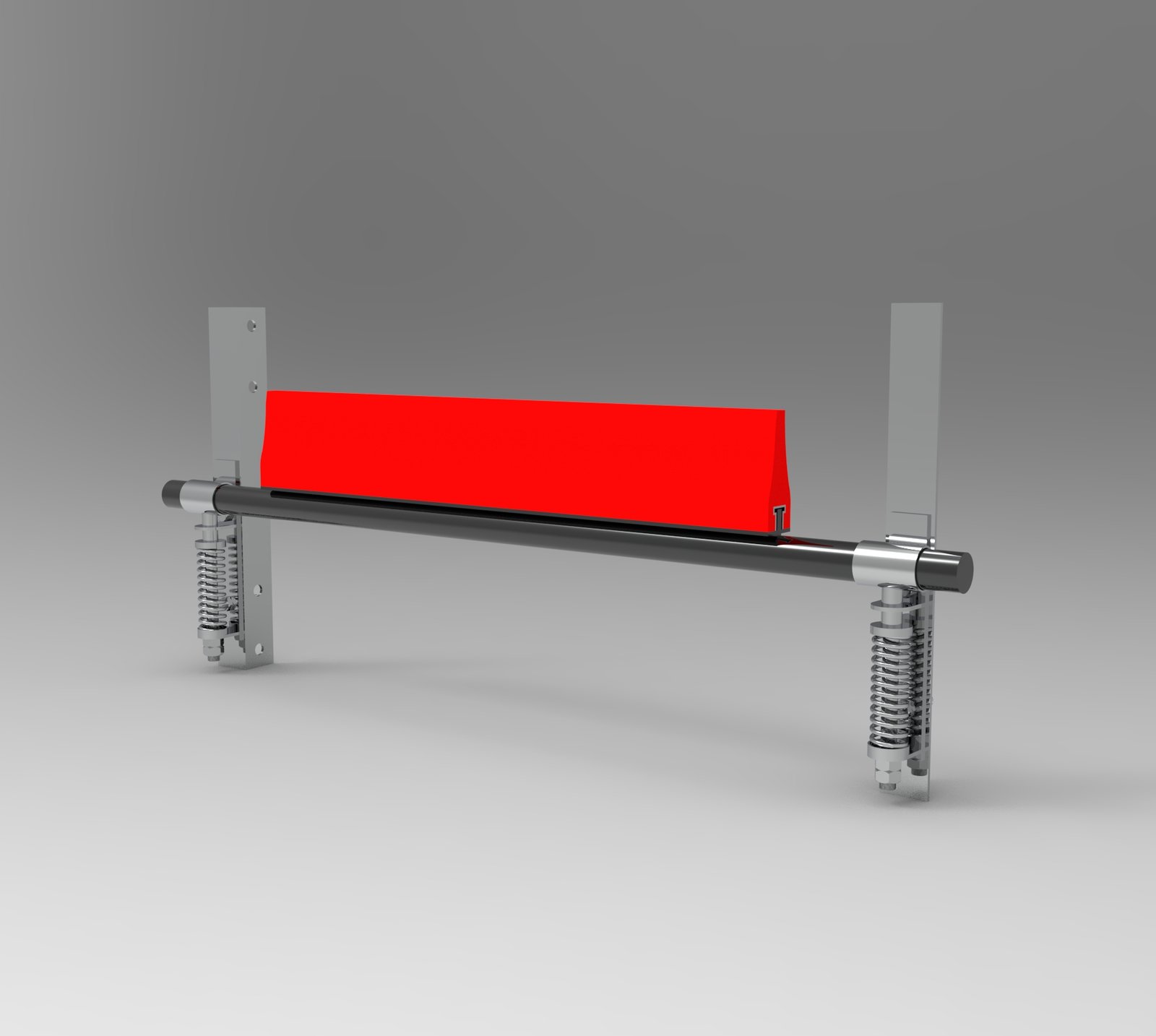
Figure 2: Chema Secondary Belt Cleaner installed on the flat return strand immediately behind the head pulley to remove fine sticky slurry.
Secondary Cleaners (Fine Squeegee Wipers)
Positioned immediately after the belt leaves the head pulley, the secondary cleaner rests against the flat return surface backed by a hold-down roller. Fitted with segmented tungsten carbide tips or rigid polyurethane blades, it acts as a squeegee to strip off microscopic moisture films and sticky fines that escape the primary scraper, lifting overall cleaning efficiency above 95%.
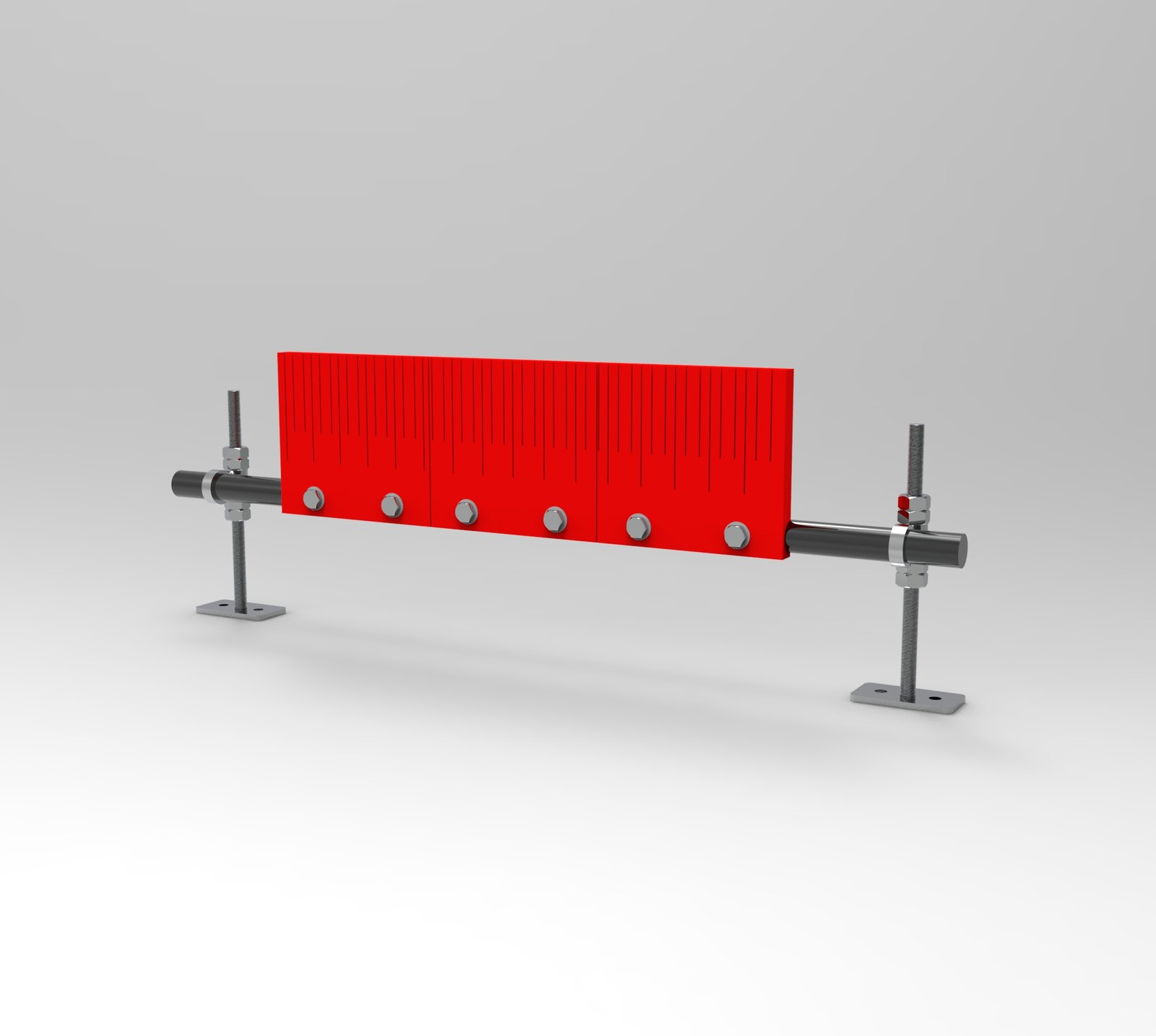
Figure 3: Chevron Belt Cleaner engineered with flexible polyurethane fingers that penetrate deep between raised rubber cleats on steep-incline conveyors.
Chevron Cleaners for Cleated & Ribbed Belts
Standard linear scrapers cannot clean chevron-patterned or cleated belts without tearing off the raised rubber ribs. Chema's Chevron Belt Cleaners utilize rotary finger drums or oscillating polyurethane beaters that penetrate between the chevron cleats, flicking trapped sand and gravel out of cleat pockets without snagging.
Return V-Plow Cleaners (Tail Pulley Protection)
Mounted on the clean inside surface of the return strand directly ahead of the tail pulley or gravity take-up. When material spills from the carrying strand onto the return belt, the V-Plow deflects the rocks off both sides of the conveyor before they enter the nip point between belt and pulley, preventing catastrophic carcass puncturing.
4. Working Principle & Contact Mechanics
The operational efficacy of a belt cleaning assembly relies upon tangential shearing force balanced with calibrated contact pressure:
"Effective belt cleaning is never achieved by crushing a scraper blade against the belt cover with brute force. High-performance cleaning is achieved by maintaining a precise geometric shearing angle and uniform low-pressure contact across the entire belt width."
When the primary blade meets the belt on the head pulley curvature, it is oriented at a trailing angle (typically 15° to 30° from the pulley tangent). As the belt travels at high speed (1.5 m/s to 4.5 m/s), the moving carryback layer collides with the blade's sharp peeling edge.
This kinetic collision generates an upward shearing vector that ruptures the capillary surface tension binding fine particles to the rubber cover. The sheared material curls downward along the curved blade face and falls into the discharge chute under gravity.
The ideal contact pressure is engineered between 11 kPa and 15 kPa:
Under-Tensioning (< 8 kPa): Fine slurry wedges beneath the blade tip, creating hydroplaning and accelerating abrasive blade wear.
Over-Tensioning (> 20 kPa): Excessive friction scorches the rubber belt cover, surges conveyor drive motor power, and causes blade chatter without increasing cleanliness.
5. Scraper Blade Polymer Science: Polyurethane vs. Carbide
Selecting the correct blade metallurgy or elastomer compound is essential for operational longevity and conveyor belt safety:
Engineering Property
Chema Cast Polyurethane
Tungsten Carbide
Natural / Neoprene Rubber
Mild Steel Plate
Belt Carcass Safety
100% Safe (Elastomeric)
Safe (Vulcanized belts only)
Safe
Severe Risk (Belt Grooving)
Mechanical Fastener Passage
Excellent (Flexes over clips)
Poor (Splice destruction risk)
Good
Rips splices instantly
Abrasion Resistance
5x over Rubber
10x – 15x over PU
1x (Standard Baseline)
Poor in wet slurry
Hydrolytic Stability
Formulated for wet wash plants
High
Moderate
Rusts and scales rapidly
Recommended Location
Primary & Secondary Cleaners
Secondary only (Vulcanized)
V-Plows & Skirt Liners
Never recommended
Chema Engineers casts our proprietary scraper blades from thermoset polyurethane resins with high molecular cross-linking. This provides superior tear strength (> 45 N/mm) and an ultra-low dynamic friction coefficient (0.15 – 0.22), ensuring blades resist cupping, feathering, and uneven edge wear in high-tonnage aggregate operations.
To prevent blade edge overhang and ensure concentrated scraping force where material is loaded, scraper blade lengths are specifically matched to conveyor belt width:
Conveyor Belt Width (BW)
Standard Scraper Blade Length
Pulley Diameter Range
Shaft Diameter
Tensioner Assembly Type
500 mm (20 in)
500 mm (Full) / 400 mm (Center)
250 mm – 450 mm
48 mm OD Pipe
Single Enclosed Spring
650 mm (26 in)
600 mm
300 mm – 500 mm
60 mm OD Pipe
Single Enclosed Spring
800 mm (32 in)
750 mm / 800 mm
350 mm – 600 mm
60 mm OD Pipe
Dual Enclosed Spring
1000 mm (40 in)
1000 mm (Full) / 900 mm (Center)
400 mm – 800 mm
76 mm OD Pipe
Dual Enclosed Spring
1200 mm (48 in)
1200 mm (Full) / 1100 mm (Center)
500 mm – 1000 mm
76 mm OD Pipe
Dual Heavy-Duty Spring
1400 mm (56 in)
1400 mm (Full) / 1300 mm (Center)
600 mm – 1200 mm
89 mm OD Pipe
Dual Heavy-Duty Spring
1600 mm – 2000 mm
1600 mm / 1800 mm / 2000 mm
800 mm – 1400 mm
102 mm OD Pipe
Dual Pneumatic / Heavy Spring
Surcharge Width Sizing Rule
In bulk quarry conveyors where aggregate surcharge does not reach the outer edges of the belt, choosing a scraper blade length 100mm to 150mm narrower than the belt width (e.g. an 850mm blade on a 1000mm belt) prevents blade contact with clean edges, focusing all scraping pressure on the loaded central path and doubling blade life.
7. Key Features & 5 Core Tangible ROI Benefits
1. Substantially Reduced Carryback
Strips away up to 95% of residual material, preventing tons of aggregate dust and wet sand from scattering along the return line every shift.
2. Dramatically Lower Maintenance
Eliminates hazardous manual shoveling under live conveyors and slashes unproductive maintenance overtime hours by over 80%.
3. Quadrupled Component Life
Shields return idler bearings and pulley rubber lagging from abrasive grinding wear, extending return roller life by 300% to 400%.
4. Optimized Belt Tracking & Safety
Prevents uneven material accumulation on pulleys that forces belts to drift off-center, eliminating edge shredding and catastrophic structural damage.
Core Design Features of Chema Cleaners:
Simple & Robust Construction: Fabricated with heavy-gauge steel crossbars and zinc-plated or powder-coated tensioner housings that withstand corrosive wash water.
Adjustable Scraper Positioning: Universal slotted brackets accommodate head pulleys from 250mm to 1200mm diameter.
Quick-Pin Modular Blade Swaps: Slide-on segmented blade modules allow blade replacement in under 15 minutes without unbolting the shaft.
8. Industrial Applications Across India
Chema Engineers Belt Cleaning Assemblies operate reliably across thousands of high-capacity bulk handling installations nationwide:
Crushing & Screening Aggregates (Maharashtra, Gujarat, Rajasthan): Primary basalt, granite, and limestone quarries utilize Chema primary cleaners to prevent wet stone dust from binding return rollers in high-tonnage crushing circuits.
M-Sand & P-Sand Washing Plants (Satara, Pune, Nashik, Kolhapur): Washed sand discharged from Chem-Wash Sand Plants carries 10% to 14% moisture. Chema polyurethane scrapers strip off sticky wet sand without blinding.
Thermal Power Stations & Coal Handling Plants (Odisha, Chhattisgarh, Jharkhand): High-speed coal conveyors rely on flame-retardant anti-static (FRAS) polyurethane cleaners to prevent combustible coal dust accumulation.
Cement Mills & Clinker Corridors: High-temperature secondary carbide scrapers handle abrasive clinker dust and raw limestone meal.
Port Bulk Terminals & Fertilizer Handling: Stainless steel hardware and chemical-resistant polyurethane blades resist corrosive salt and chemical attacks during ship unloading.
9. Installation Best Practices & Preventative Maintenance Protocol
Adhering to standard installation and inspection procedures ensures maximum cleaning efficiency and long blade life:
Installation Best Practices:
Verify Pulley Concentricity: Ensure head pulley radial runout is under 1.5mm and lagging is intact across the face.
Align Main Crossbar: Mount the shaft parallel to the pulley centerline, positioning the blade tip below the horizontal centerline (typically at the 4 o'clock or 8 o'clock position, depending on rotation).
Calibrate Spring Deflection: Adjust tensioning nuts until the indicator pin aligns with the calibrated operating zone on the tensioner scale.
Test Splicing Clearance: Manually inch the conveyor to verify the blade flexes smoothly over mechanical fasteners or vulcanized joints.
Preventative Maintenance Checklist
Weekly: Inspect visual blade wear line and re-tension spring if the gauge indicates preload loss. Clear compacted dirt from brackets. Monthly: Inspect polyurethane blade face for uneven cupping. Verify crossbar locking collars and mounting bolts are torqued. Quarterly: Lubricate tensioner pivot bushings. Replace blade when worn down to the molded wear-limit indicator line.
10. Frequently Asked Questions (FAQ)
Q1: What is a Belt Cleaning Assembly?
A Belt Cleaning Assembly is a mechanical scraper system installed on a conveyor to remove residual bulk material sticking to the return belt after payload discharge. It includes durable scraper blades, a rigid crossbar shaft, and self-adjusting tensioners.
Q2: What is the difference between primary and secondary belt cleaners?
Primary cleaners mount on the face of the head pulley and peel away 60% to 75% of coarse bulk carryback. Secondary cleaners sit immediately behind the head pulley along the return run to shave off remaining fines and moisture, lifting total cleaning efficiency to 95%+.
Q3: Why choose Polyurethane blades over metal scrapers on mechanical splices?
Polyurethane has elastomeric resilience and flexibility. When mechanical belt fasteners (clips or rivets) hit a polyurethane blade, the blade yields and flexes without damaging the splice or ripping the belt cover. Metal or carbide blades can snag mechanical fasteners and tear the conveyor carcass.
Q4: What causes conveyor belt scraper chatter and how do you stop it?
Scraper chatter (high-frequency squealing or vibration) occurs when the blade is mounted at an incorrect angle, over-tensioned, or running dry on an empty belt. Correcting the blade angle, calibrating spring tension, or selecting low-friction polyurethane compounds eliminates chatter.
Q5: What scraper blade lengths are available from Chema Engineers?
Chema manufactures scraper blade lengths of 500mm, 600mm, 800mm, 1000mm, 1200mm, and 1400mm as standard off-the-shelf sizes, with customized lengths up to 2400mm available for heavy overland conveyors and ship-loading circuits.
Q6: How does carryback lead to belt mistracking?
When fugitive material sticks to return rollers, it accumulates eccentrically, making parts of the roller larger in diameter than others. This crowned buildup guides the belt sideways, causing it to walk off the idler centers and shred its edges against the conveyor structure.
Direct Engineering Support
Upgrade Your Conveyor Circuit with Chema Belt Cleaners
Don't let fugitive material carryback erode your plant profitability. Chema Engineers manufactures high-performance polyurethane primary scrapers, tungsten carbide secondary cleaners, and custom chevron belt cleaners engineered for harsh quarry and mining duties across India.